

Learning works best when it is personal
When schools create the conditions for each student to learn at the right pace, in the right way, with the right support, more students reach their full potential…and then…
…Everything Changes
We know what effective learning looks like.
Now we can deliver it consistently for every student.
Because we can see progress in real time and respond before students fall behind and gaps grow.
I work with school leaders to turn that capability into practice—so learning becomes more personalized, more responsive, and more effective for every student.
Our work shows up in three ways:
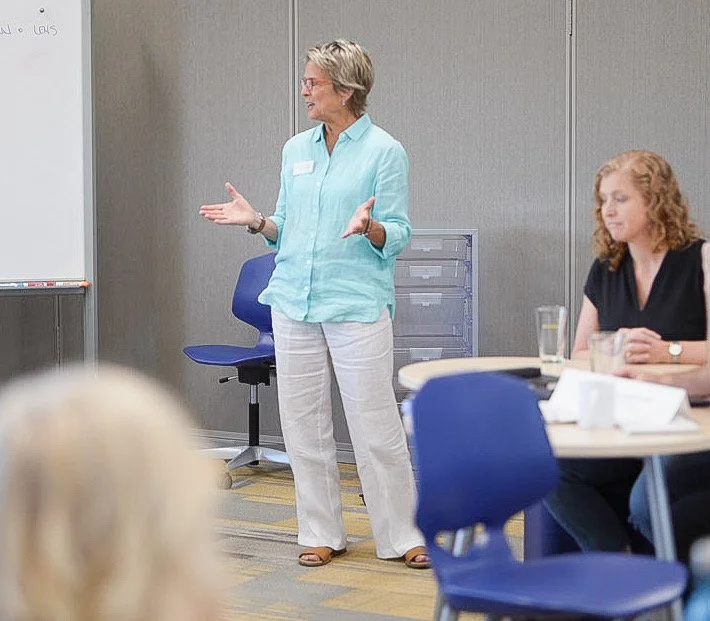
Keynote Speaking
Big Ideas, Real Impact.
Each of my keynotes and workshops explores a different facet of the same core challenge: how we design learning so that more students succeed, not just some.
Whether we’re talking about early learning, classroom practice, or the design of learning environments, the underlying issue is consistent—our systems have not always allowed us to respond to students in time.
That is beginning to change.
With new tools and expanded capacity, we can now see and respond to learning in ways that were not previously possible—bringing greater clarity to instruction and creating more opportunities for every student to build a strong foundation.
These sessions are designed to help educators make sense of that shift and take meaningful steps forward.
Workshops
Keynote Talks
Leadership
Leading with Purpose and Courage
Creating Clarity, Alignment, and Momentum
Leadership is not the problem. But lack of clarity is. In most districts, strong work is happening across the board.
But without a shared direction, priorities compete… initiatives stack… and progress slows…
Not because people aren’t working hard…but because the system isn’t aligned. When leadership is clear, the system moves... and everything else becomes possible.
-
A small set of clear priorities that guide every decision, and reduce initiative overload.
-
Making sure time, support, and expectations reflect those priorities—so they show up in the classrooms, not just plans.
-
Helping leaders communicate clearly and consistently…
so people understand not just what’s changing, but why it matters. -
Connecting leadership decisions to classroom practice—
so efforts reinforce one another rather than compete.
This is the work of leadership.
Not adding more… but creating clarity, alignment, and momentum across the system. Because without that…nothing sticks

Proof of Practice Prototype
STOP Guessing. START Testing What Works.
Not a pilot. Not a simulation. Proof of Practice Prototyping in Real Classrooms—Where Learning is Happening.
Our Proof of Practice Prototype tests high-potential ideas in authentic classroom settings with minimal disruption to the school day.
Start small: one classroom, one subject, one short-cycle implementation.
Measure impact, learn quickly, and scale what works
Increase Capacity. Build Confidence. Earn the Courage to Change the System.
How we Work: From Isolated Innovation to System-Wide Clarity
I have developed a system that transforms innovation from a series of disconnected experiments into a disciplined process of testing, learning, and scaling what works. The result is greater clarity, lower risk, and stronger confidence in district decision-making.
1. Start with Curiosity, Not Assumptions
We begin by asking better questions.
Where are students getting stuck?
Where are teachers compensating for gaps in the system?
What’s working—and why?
2. Make Learning Visible
Using available data and emerging tools, we surface what is often hidden:
Where gaps actually occur
How students are progressing in real time
Where variability is helping—or hurting
3. Explore What’s Now Possible
With a clearer picture, we explore new possibilities. Not in theory—but within the constraints districts actually face:
existing schedules
current staffing
accountability requirements
This is where AI begins to matter—not as a tool, but as expanded capacity.
4. Field Test Inside the System
We don’t roll out initiatives system-wide. We test. Focused. Measured. Real.
One grade level
One subject
One defined cycle
No added time. No additional staffing.
Just a different way of organizing learning.
5. Measure What Matters
Field tests are designed to produce evidence. Not impressions. Not anecdotes.
We compare:
student progress
engagement
instructional effectiveness
against real conditions inside the district.
6. Iterate, Refine, and Scale
What works is refined. What doesn’t is adjusted.
From there, districts decide how to move forward—with clarity, not guesswork.